Printable number tables are one of the most practical tools for learning, organizing, and managing information. Whether you work in education, logistics, or creative crafts, having a clean and structured list of numbers from 1 to 5000 can save time, reduce errors, and simplify everyday tasks.
This comprehensive guide explains why these tables are useful, how they are typically organized, and how you can create your own high‑quality versions using common software tools.
📘 Why Printable Number Tables Matter
A complete sequence from 1 to 5000 offers a flexible resource that adapts to countless scenarios. When arranged neatly on A4 sheets, the entire set fits across five pages, making it easy to print, store, and reuse.
⭐ Key Benefits
- Warehouse numbering — Ideal for labeling shelves, bins, and inventory items.
- Savings tracking — Helps children and adults visualize progress in piggy banks or budgeting systems.
- Classroom learning — Perfect for counting practice, math games, and number recognition.
- Administrative tasks — Useful for forms, logs, and structured documentation.
- Craft and DIY projects — Great for labels, templates, and creative numbering systems.
📄 How the 1–5000 Number Set Is Organized
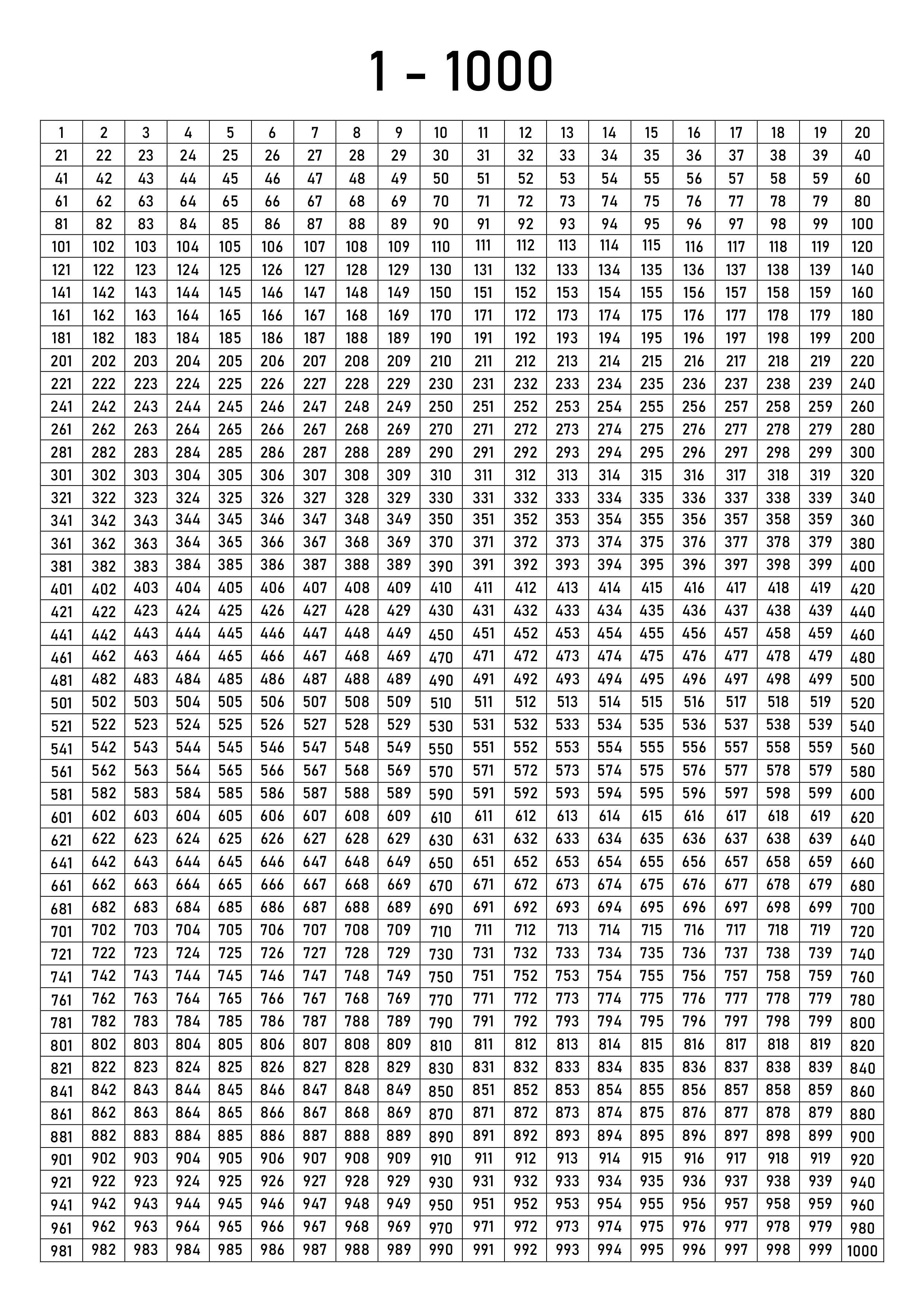
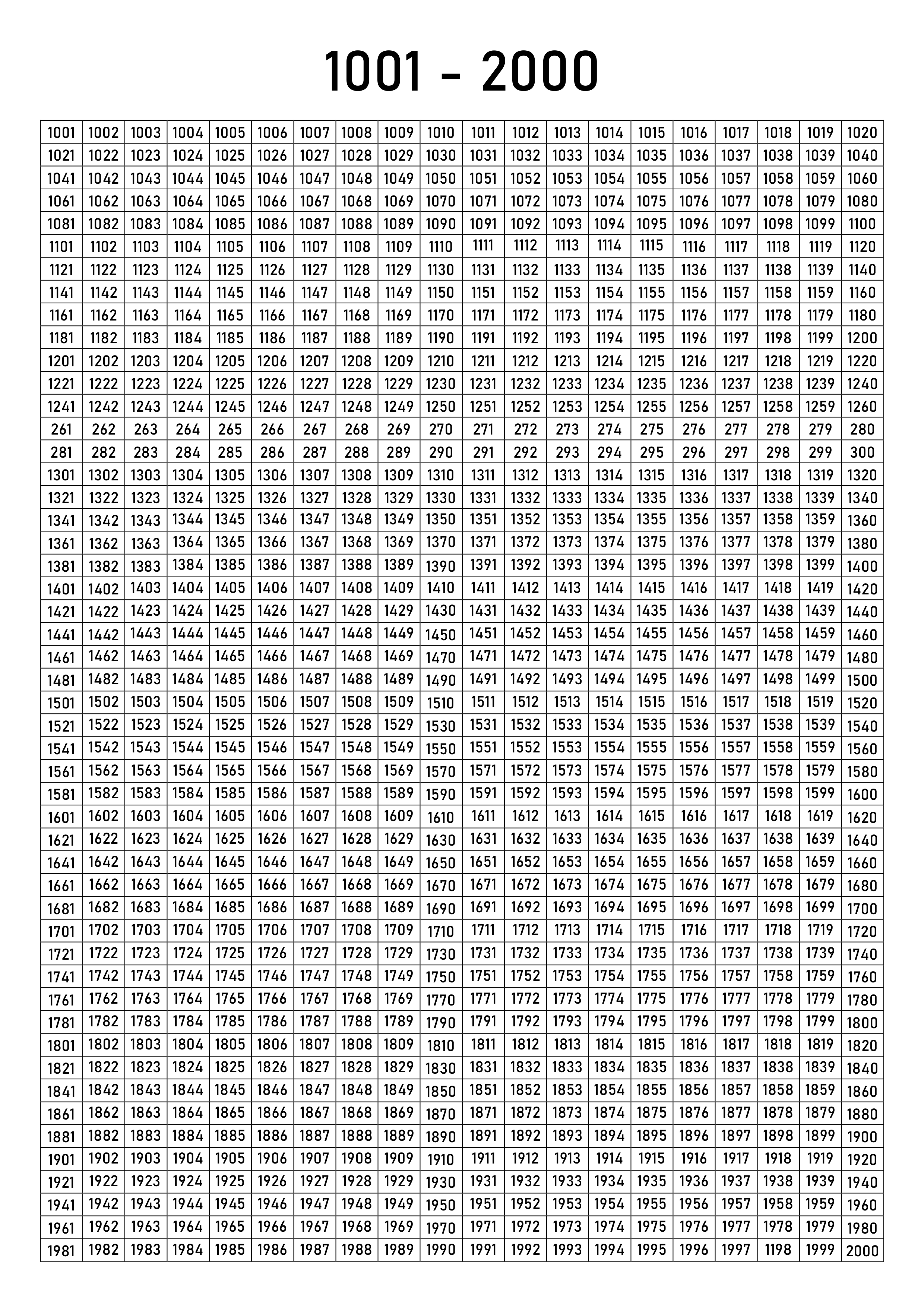
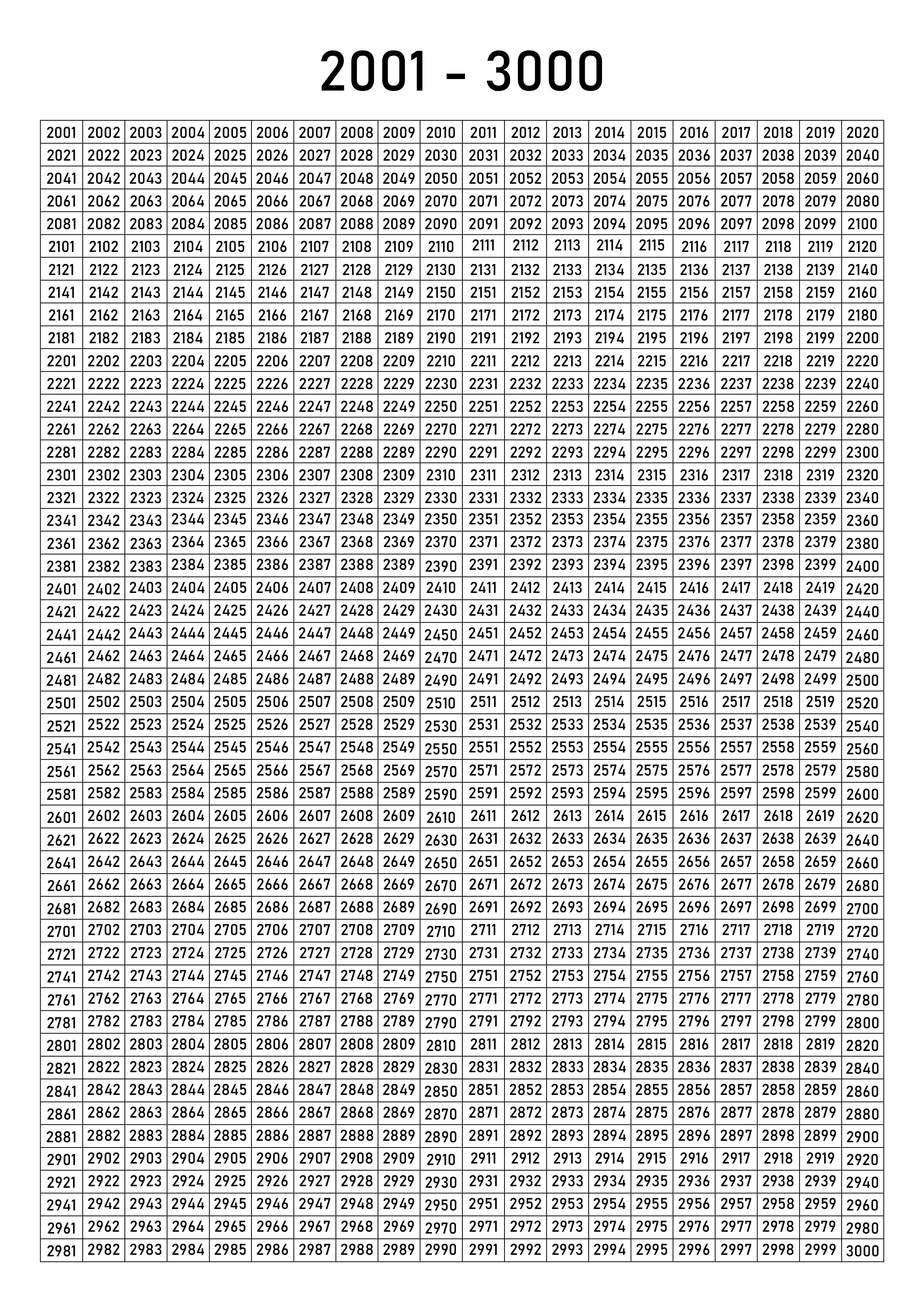
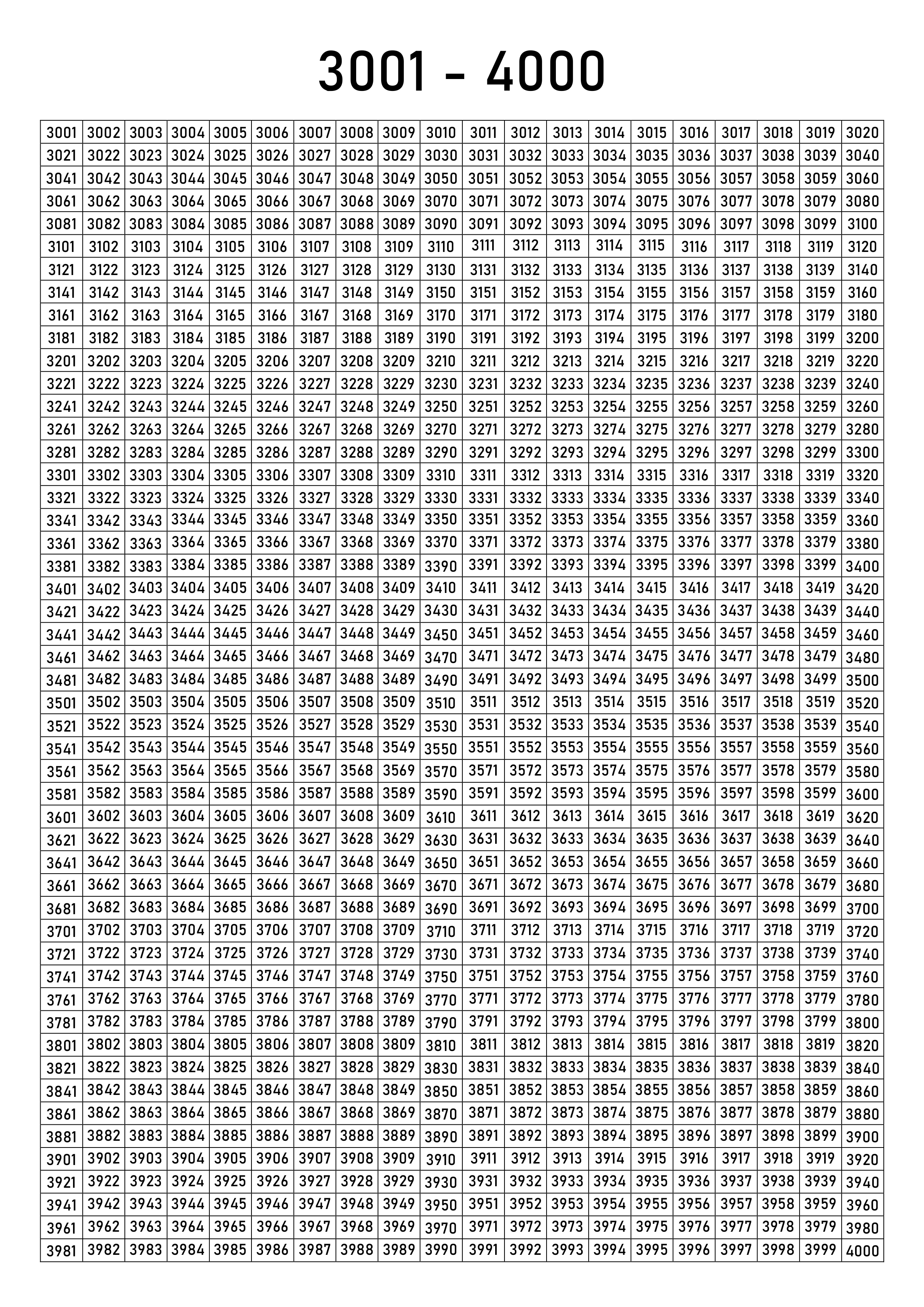
To make navigation easier, the full sequence is commonly divided into five printable sheets. Each sheet contains exactly 1000 numbers, arranged in a clean, readable layout.
📑 Sections Included
- Numbers 1–1000
- Numbers 1001–2000
- Numbers 2001–3000
- Numbers 3001–4000
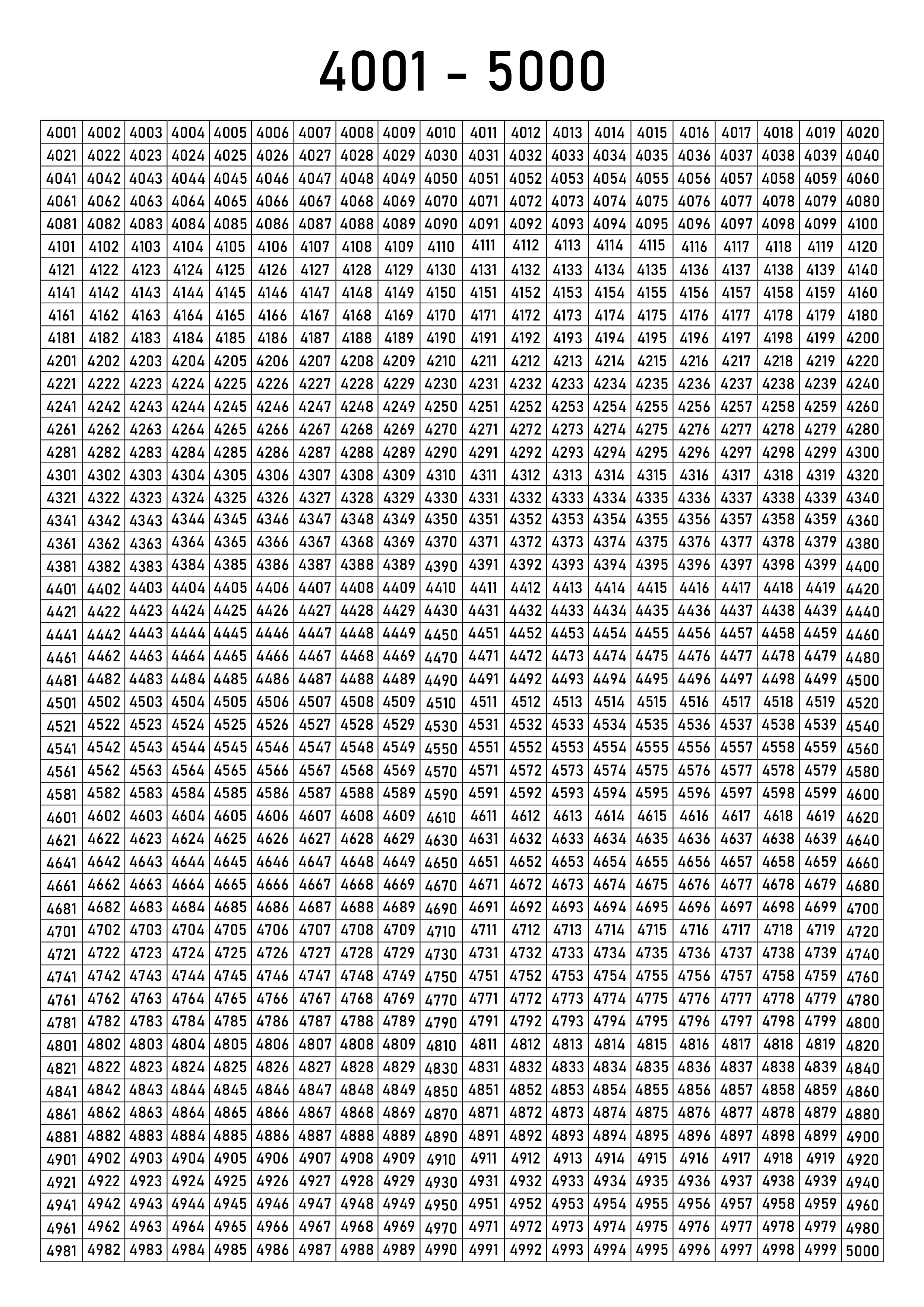
- Numbers 4001–5000
These sheets are often provided in high‑quality PNG format, ensuring crisp printing and easy readability.
🛠️ How to Create Your Own Number Table
If you prefer a custom layout, you can generate your own number tables using standard software. Below are two reliable methods.
🧮 Creating Number Tables in Spreadsheet Software
Spreadsheet tools like Excel, Google Sheets, or LibreOffice Calc make it easy to generate long sequences automatically.
Steps
- Create a new spreadsheet
- Enter the starting number (type “1” in the first cell)
- Use the fill handle to extend the sequence to 5000
- Adjust column widths for readability
- Add borders or formatting if needed
- Print in A4 vertical orientation
This method is fast, flexible, and ideal for users who want full control over layout and spacing.
📝 Creating Number Tables in Word Processors
Word processors such as Microsoft Word or Google Docs allow you to build structured tables with precise formatting.
Steps
- Create a new document
- Insert a table with enough rows and columns for 5000 cells
- Fill the cells with numbers from 1 to 5000
- Adjust font size and spacing
- Print with proper margins and orientation
This approach is perfect when you want to integrate the number table into a larger document or maintain strict visual control.
💡 Practical Tips for Best Results
- Use multiple columns to keep the layout compact
- Insert page breaks to avoid cutting off rows
- Save your file for future updates or reprints
- Consider larger paper sizes if you prefer fewer pages
📚 Quick Access: Number Ranges
- Numbers 1–1000
- Numbers 1001–2000
- Numbers 2001–3000
- Numbers 3001–4000
- Numbers 4001–5000
Numbers from 1 to 1000
 |
Numbers from 1001 to 2000
 |
Numbers from 2001 to 3000
 |
Numbers from 3001 to 4000
 |
Numbers from 4001 to 5000
 |
🏁 Conclusion
A printable table of numbers from 1 to 5000 is a simple yet powerful tool for education, organization, and everyday tasks. Whether you download ready‑made PNG sheets or create your own using spreadsheet or word‑processing software, you’ll have a clear, structured resource that can be reused anytime. With five A4 pages covering the entire sequence, these tables are easy to print, store, and apply across countless projects.




Leave a Reply