Few moments are as heart-stopping as calling your dog’s name, hearing only silence, and realizing the yard gate was left unlatched. Panic sets in fast, yet the first few hours after a pet goes missing are the most critical window for a safe return. While posting online helps, physical flyers remain one of the most reliable ways to alert delivery drivers, dog walkers, and neighbors who aren’t glued to local social media feeds.
A rushed poster scribbled with a ballpoint pen rarely gets a second glance from someone driving past at 30 miles per hour. To turn bystanders into active searchers, your poster needs clarity, high contrast, and the exact details strangers need to spot and safely report your pet. Below is everything you need to design, print, and distribute a lost dog flyer that gets results.
What Makes a Lost Dog Flyer Actually Work?
At its core, a lost dog flyer is a visual emergency alert. Its sole job is to communicate three things within three seconds: what the dog looks like, where they vanished, and how to reach you immediately.
People walking down the street or waiting at a traffic light won’t stop to read a wall of text. High-performing missing pet posters rely on visual hierarchy—giant headlines, a crisp photo, and scannable bullet points—so the human eye absorbs the critical facts effortlessly.
6 Essential Elements Every Missing Dog Poster Needs
Before opening a design tool or template, gather these six pieces of information. Leaving even one out can delay a reunion.
1. A High-Contrast, Close-Up Photo
Skip the cute artistic shots where your dog is curled up in a dim living room or wearing a Halloween costume. Choose a bright, sharp, front-facing photo taken at eye level that clearly shows their face, ear shape, and coat markings. If your dog has a distinctive body shape or tail, consider adding a second smaller full-body photo.
2. Bold Headline and Your Dog’s Name
Top the page with “LOST DOG” in massive, uppercase sans-serif letters (think Arial Black, Impact, or Helvetica Bold). Directly underneath, print your dog’s name in large, readable text. Knowing a dog’s name helps a finder call them gently rather than chasing them.
3. Breed, Size, and Physical Traits
State the breed (or best guess for a mix), approximate weight, and primary coat colors. Highlight unmistakable visual cues:
- 🐾 Unique markings: White chest patches, spotted paws, heterochromia (two different colored eyes), or a docked tail.
- Collar & gear: Mention the exact color and material of their collar, harness, or bandana.
- 🩺 Microchip status: Simply write “MICROCHIPPED”—this deters pet theft and reminds finders to visit any local vet clinic for a free scan.
4. Exact “Last Seen” Location and Time
Be specific. Instead of writing “Lost near Oak Park,” write “Last seen Tuesday, Oct 14 at 4:30 PM near the intersection of Oak Ave & 4th Street.” Mentioning what startled them—such as fireworks, a delivery truck, or an open fence—helps neighbors predict whether the dog is hiding nearby or running in a straight line.
5. Temperament and Approach Instructions
Scared dogs rarely act like themselves. Even the friendliest Golden Retriever can bolt into traffic if a stranger runs toward them shouting. Add a brief behavioral note in bold:
- ⚠️ “SHY / SCARED — DO NOT CHASE. Please call immediately with location.”
- 💊 “NEEDS DAILY MEDICATION” (if applicable, as medical urgency motivates people to act faster).
6. Large, Unmissable Contact Details
Print your primary phone number in the largest font possible at the bottom of the page. Include a backup number in case your phone battery dies or you are on another call. If you are offering a reward, state “REWARD” clearly without necessarily listing a dollar amount, which can sometimes attract scammers.
Design & Formatting Tips for Maximum Visibility
You don’t need graphic design experience to make a poster stand out from utility-pole clutter—just follow a few proven visual rules:
- 🎨 Use High-Contrast Colors: Black text on a bright neon yellow, lime green, or hot pink background catches peripheral vision far better than standard white printer paper.
- 📐 Leave Plenty of White Space: Crowded margins make text unreadable from a distance. Keep descriptions short and punchy.
- ✂️ Skip the Tear-Off Tabs: Almost everyone carries a smartphone today. People will snap a photo of your flyer rather than rip off a tiny paper strip—and tear-off tabs make the poster look messy once a few are gone.
- 🌧️ Weatherproof Your Prints: Morning dew and sudden rain can ruin standard ink in hours. Slide each flyer into a clear plastic sheet protector upside down (so water can’t drip in from the top) and seal the edges with clear packing tape.
Where and How to Distribute Your Flyers Strategically
Printing fifty copies only works if they end up where local eyes actually look. Start within a 1-to-2-mile radius of the last-seen location and expand outward based on your dog’s size and energy level.
High-Traffic Physical Locations
- 🏥 Veterinary Clinics & Animal Hospitals: Front-desk staff frequently see people bringing in stray pets for microchip scans.
- 🛒 Grocery Stores, Coffee Shops & Laundromats: Ask managers for permission to post on community bulletin boards near entrances.
- 🌳 Dog Parks & Trailheads: Local dog owners are naturally observant and tend to notice an unfamiliar pup wandering alone.
- 📬 Mail Carriers & Delivery Drivers: Hand flyers directly to USPS, UPS, Amazon, and trash collection drivers—they cover every street in your neighborhood daily.
Digital Sharing & Local Networks
Upload a clean digital version (PDF or high-res PNG) of your flyer to local Facebook lost-and-found pet groups, Nextdoor, Ring Neighbors, and PawBoost. Ask neighbors to check their security cameras, backyard sheds, and crawl spaces, as frightened dogs often squeeze into tight, quiet spots during daylight hours.
Extra Steps to Accelerate Your Search
A flyer works best alongside proactive groundwork:
- Contact Municipal Shelters in Person: Phone calls aren’t always enough—shelter intake descriptions can be inaccurate. Visit local shelters every 24 to 48 hours to walk the kennels yourself.
- Leave Familiar Scents Outside: Place an unwashed T-shirt you recently wore, your dog’s bed, and a bowl of water (avoid food, which attracts wildlife) near the spot they escaped. Dogs rely heavily on scent to navigate home.
- Search Quietly at Dawn and Dusk: Lost dogs often hunker down during noisy daytime traffic and move around when streets go quiet. Bring a flashlight to spot eye reflections under porches and bushes.
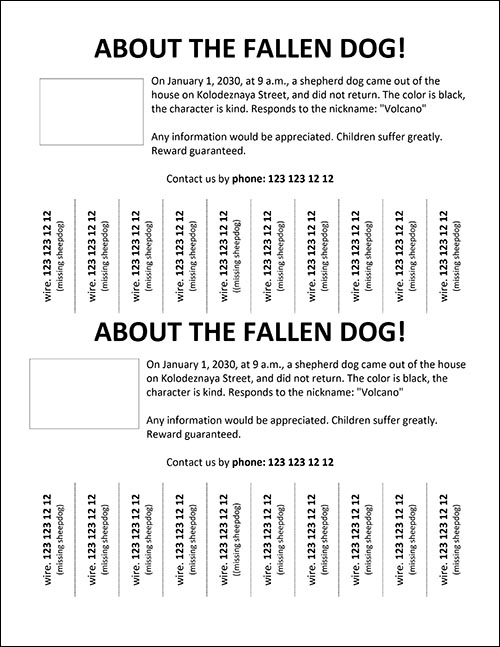
Download flyer Lost dog
Bringing Your Best Friend Home
Searching for a missing dog tests your patience and stamina, especially when hours stretch into days. Keep your flyers fresh, replace any weathered posters promptly, and follow up on every single sighting—even if a tip comes from several miles away. Stay persistent, lean on your neighbors, and keep your phone charged; dogs are remarkably resilient, and a clear, well-placed flyer is often the exact bridge that leads them safely back to your door.



Leave a Reply