Coloring alphabet letters is far more than a simple afternoon activity—it is a cornerstone of early childhood literacy and cognitive development. Early exposure to letter shapes builds a strong foundation for reading readiness, fine motor control, and creative self-expression.
Whether you are a classroom educator designing engaging literacy centers, a homeschooling parent structuring morning work, or a caregiver seeking meaningful offline play, high-quality printable letter coloring pages seamlessly blend fun with foundational learning.
Why Alphabet Coloring Matters in Early Childhood Education
Combining visual art with phonics accelerates letter acquisition. When young learners engage multiple senses—visually tracking shapes, physically moving crayons, and audibly pronouncing letters—they form stronger neural connections.
       Visual Tracking (Shapes & Outlines)
                        │
                        ▼
Kinesthetic Practice ◄──────► Auditory Reinforcement
(Holding Crayons/Pencils)    (Phonemic Awareness)
🧠 Accelerated Letter Recognition
Coloring forces children to focus on the intricate curves, sharp angles, and intersecting lines that form each character. Tracing the outline of a uppercase “B” or a lowercase “g” helps children distinguish easily confused letters like “b” and “d” or “p” and “q”.
✍️ Fine Motor Skill Enhancement
Proper pencil grip requires control over tiny hand muscles. Gripping chunky crayons, colored pencils, or fine-tip markers builds grip strength, wrist stability, and finger dexterity. These foundational physical skills translate directly into fluent handwriting down the road.
🎯 Visual-Motor Integration & Coordination
Staying inside the lines requires spatial awareness and precise visual-motor integration. As hand-eye coordination matures, children gain greater spatial control over their movements, preparing them for writing within ruled lines on notebook paper.
🎨 Self-Expression and Emotional Regulation
Structured creative activities offer a peaceful mental focus. Selecting colors, filling geometric patterns, and personalizing characters allows young children to practice decision-making in a calm, stress-free environment.
Smart Strategies for Parent & Classroom Learning
To turn standard coloring sessions into active educational moments, integrate these practical strategies:
💡 Step-by-Step Learning Framework
- Focus on Phonemic Association
- Have your child name the target letter and pronounce its primary sound as they color.
- Example: “Letter S says /s/ like sun, snake, and star.”
- Integrate Multi-Sensory Textures
- Move beyond traditional crayons. Introduce watercolors, finger paints, dot markers (dabbers), or texture rubbing plates to keep sensory play dynamic.
- Incorporate Interactive Games
- Letter Scavenger Hunt: Ask children to find three real-world items in the room that begin with the letter they are currently coloring.
- Color by Sound: Assign specific colors to phonetic sounds (e.g., color all short vowel pages yellow and long vowel pages blue).
- Display Finished Artwork
- Transform finished pages into an interactive classroom wall display or an alphabet binder. Celebrating completed work boosts confidence and reinforces long-term retention.
Choosing the Right Alphabet Pages by Age Group
Different stages of early childhood require tailored learning materials. Match the design complexity to your learner’s age:
| Age Group | Recommended Design Style | Key Developmental Objective | Ideal Coloring Tools |
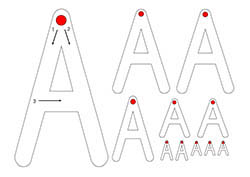
| Toddlers (Ages 2–3) | Jumbo block letters with thick lines and zero background clutter. | Hand-eye coordination & basic grasp. | Triangular chunky crayons, washable palm markers. |
| Preschool (Ages 3–4) | Uppercase and lowercase pairs featuring relatable animal illustrations. | Letter recognition & phoneme association. | Twistable crayons, dot markers, thick washable markers. |
| Kindergarten (Ages 5–6) | Detailed thematic letters paired with vocabulary tracing lines. | Fine motor control, vocabulary & handwriting practice. | Colored pencils, fine-tip markers, watercolor paints. |
Creative Art Techniques to Upgrade Letter Coloring
Break away from standard coloring routines with these creative art mediums:
- 🎨 Dot Marker Stippling: Use bingo dabbers to fill in block letters, promoting target precision.
- ✂️ Torn Paper Collages: Paste small bits of colored construction paper inside the letter boundaries to build tactile awareness.
- 🌿 Nature Textures: Glue small leaves, flower petals, or sand inside large letter outlines to make nature-inspired letter art.
- ✨ Glitter & Wax Resist: Draw patterns inside letters with white wax crayons before brushing over them with watercolors for a magic reveal.
Frequently Asked Questions
What order should children learn their letters?
While traditional teaching starts from A to Z, many phonics programs (such as Orton-Gillingham or Montessori) suggest starting with high-frequency consonants and short vowels like S, A, T, P, I, N. This allows children to start forming simple words early in the learning process.
Are block letters better than decorative letters for learning?
For initial exposure, clean block letters are best because they keep focus on the core shape of the character. Once a child masters letter identification, decorative or thematic pages provide great visual variety and engagement.
Download letters for coloring


Transform Daily Play into Lifelong Literacy
Printable alphabet coloring pages bridge the gap between creative play and structured early literacy. By choosing age-appropriate designs, encouraging open-ended artistic exploration, and pairing visuals with spoken phonics practice, you transform simple quiet time into powerful developmental milestones.
Start with two or three letters a week, keep sessions fun and low-pressure, and watch your young learners build lasting confidence in their reading and writing journey!
Related Posts:
- Letter writing Alphabet
- Good morning images new 2023

- 3D letters paper

- Alphabet cards

- Educational game for kids: collect the picture

- Memory cards printable

- Japanese alphabet for kids: download and print flashcards

- Number 1 for coloring

- Graphic dictation

- Paper cut dolls

- ABC tracing worksheets

- Coloring by numbers for 7 years: download and print

Leave a Reply